Home 01
Parliament 05
Contact 17
Mr. Digant Sharma +91 9769999960 im@digantsharma.com

06 — Institutional architecture

Ministry of Tribal Affairs

The Union ministry responsible for policy, planning and coordination of programmes for India's Scheduled Tribes. Jual Oram became its first minister in 1999 and has led it for three tenures.

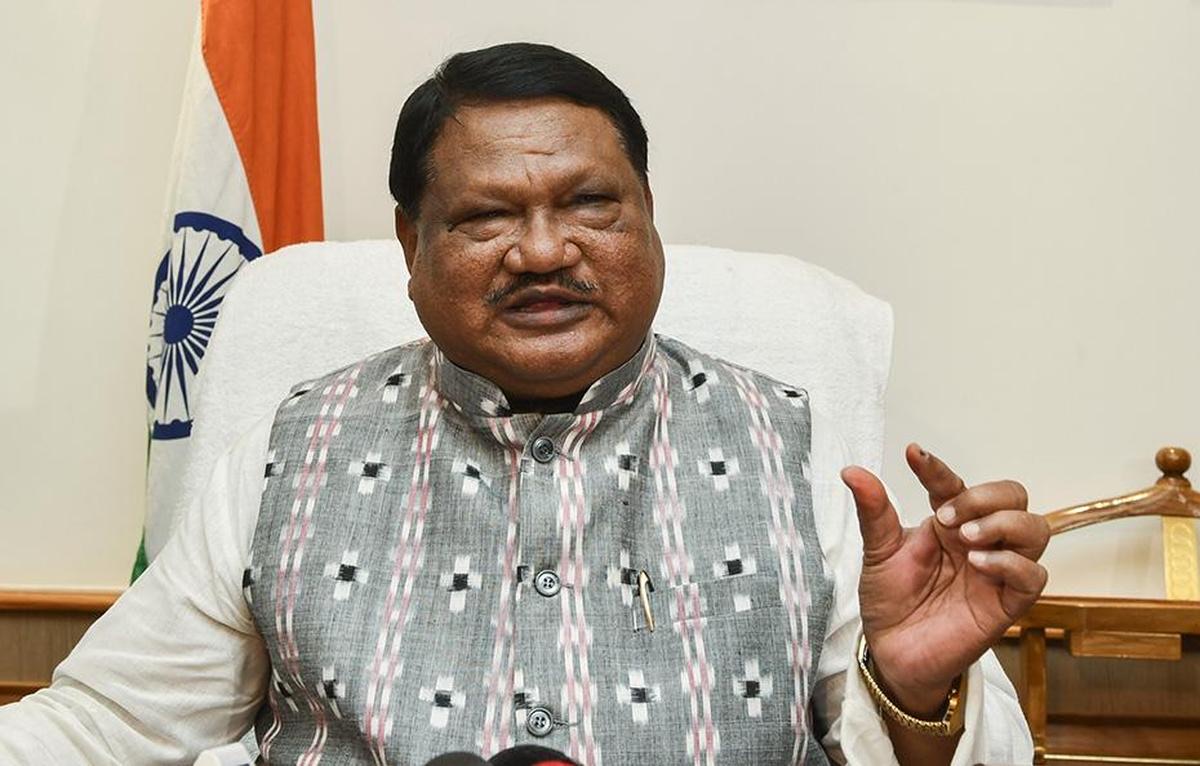
Jual Oram seated in an office, speaking and gesturing, with the national flag behind him
M-01At the Ministry of Tribal Affairs after assuming charge, June 2024.
I13 Oct 1999 – May 2004First minister of the new Ministry · 13th Lok Sabha
IIMay 2014 – May 2019Second tenure · 16th Lok Sabha
III9 Jun 2024 – presentThird tenure · 18th Lok Sabha

01 — Origin

A ministry created in 1999

Historical context

The Ministry of Tribal Affairs was set up in 1999, when the Ministry of Social Justice and Empowerment was bifurcated. The aim was a more focused approach to the integrated socio-economic development of Scheduled Tribes, who had until then been served by a ministry with a much wider remit.

PIB records that Jual Oram "was sworn as the first Union Minister for Tribal Affairs on 13th October 1999, when Prime Minister Shri Atal Bihari Vajpayee created the Ministry."

Ministry of Tribal Affairs — About the Ministry (opens in a new tab) · PIB, 14 June 2024 (opens in a new tab)

02 — Mandate

Mandate

Official statement

"The Ministry of Tribal Affairs is the Nodal Ministry for overall policy planning and coordination of programmes for development of STs."

Ministry of Tribal Affairs, tribal.nic.in (opens in a new tab)

Subjects allocated to the Ministry

Under the Government of India (Allocation of Business) Rules, 1961, as summarised by the Ministry.

  1. 01Social security and social insurance for Scheduled Tribes
  2. 02Tribal welfare: planning, project formulation, research, evaluation, statistics and training
  3. 03Promotion and development of voluntary effort on tribal welfare
  4. 04Development of Scheduled Tribes
  5. 05Scheduled Areas
  6. 06Monitoring of welfare funds for Scheduled Tribes, within the framework set by NITI Aayog
  7. 07Matters relating to the National Commission for Scheduled Tribes
  8. 08The Protection of Civil Rights Act, 1955 and the SC/ST (Prevention of Atrocities) Act, 1989 as they relate to STs (excluding criminal justice administration)
03 — Architecture

How the institutions fit together

The Union Minister leads the Ministry and answers for it in Parliament. Most delivery depends on autonomous bodies, State Governments and other Union ministries.

Accountable toParliamentQuestions, statements, legislation, committees
Political headUnion Cabinet MinisterJual Oram, since 9 June 2024. Minister of State: Durgadas Uikey
Constitutional bodyNational Commission for Scheduled TribesArticle 338A. The Ministry handles matters relating to the Commission
Administrative headMinistry of Tribal Affairs · Secretary and divisionsSchemes, budget, guidelines, monitoring and coordination
EducationNESTSRuns the EMRS scheme with State EMRS societies
LivelihoodsTRIFEDPMJVM, Van Dhan, MFP marketing, Tribes India, RISA
FinanceNSTFDCConcessional finance for ST entrepreneurs, established 2001
KnowledgeTribal Research InstitutesResearch, documentation and training
States and UTsTribal welfare departments, ITDAs and ITDPsImplement schemes; Governors and Tribes Advisory Councils in Fifth Schedule areas
Union ministriesLine ministries in convergence17 under DAJGUA; 9 under PM-JANMAN
Sources: Ministry of Tribal Affairs (opens in a new tab); PIB on NESTS (opens in a new tab); PIB on NSTFDC (opens in a new tab); PIB on DAJGUA (opens in a new tab); PIB on PM-JANMAN (opens in a new tab).

04 — The role

What the Union Minister does

The role in general, with examples of documented work from the current tenure.

Policy direction

Source-based analysis

Sets priorities for the Ministry's schemes, within the Union Budget and Cabinet decisions.

Example Day-long review of schemes and a 100-day plan with the Minister of State, 17 July 2024. PRID 2033873 (opens in a new tab)

Accountability to Parliament

Fact

Answers questions and lays statements for the Ministry in both Houses.

Example Statements on EMRS, Van Dhan and Adi Karmayogi laid on 13 August 2026. PRID 2298789 (opens in a new tab)

Programme review

Fact

Chairs reviews of implementation with officials, agencies and States.

Example National review of EMRS construction, 5 May 2026. PRID 2258203 (opens in a new tab)

Institutional reform

Fact

Issues frameworks that shape how field institutions work.

Example National Framework and Operational Guidelines for ITDAs and ITDPs, released 15 August 2026. PRID 2300052 (opens in a new tab)

Coordination and partnerships

Fact

Works with other ministries, States, elected representatives and foreign counterparts.

Example Co-chaired an India–Vietnam ministerial meeting on tribal and ethnic development, 18 March 2026. PRID 2242130 (opens in a new tab)

Statutory bodies

Fact

Engages with the Ministry's societies, corporations and commissions.

Example Chief Guest at the NCST's 23rd Foundation Day, 19 February 2026. PRID 2230380 (opens in a new tab)

05 — Relationships

States and central ministries

With State Governments

Fact

Most tribal development is delivered by States. Under the Forest Rights Act, 2006 the Ministry is the nodal agency, but States process claims, and the Ministry compiles national progress reports. EMRSs are run by NESTS together with State EMRS societies. In the ten States with Fifth Schedule Scheduled Areas, the Governor and the Tribes Advisory Council have particular constitutional roles.

With other Union ministries

Fact

The Ministry's two largest mission-mode programmes depend on other ministries. DAJGUA has 25 interventions implemented by 17 line ministries. PM-JANMAN has 11 interventions implemented by 9 ministries. As of 30 June 2026, for example, 831 mobile medical units had been put into operation under PM-JANMAN through the Ministry of Health and Family Welfare.

PIB, 5 Feb 2026 (DAJGUA) (opens in a new tab) · PIB, 2 Apr 2025 (PM-JANMAN) (opens in a new tab) · PIB, 13 Aug 2026 (PM-JANMAN progress) (opens in a new tab) · Constitutional provisions (opens in a new tab)

06 — Resources

Budget, 2024–25 to 2026–27

The Ministry's allocation in the Union Budget, in ₹ crore. "BE" is the Budget Estimate, "RE" the Revised Estimate. "Actual" is the expenditure reported in the Budget documents.

7,150.01EMRS, BE 2026–27 (₹ crore)
2,013.46DAJGUA, BE 2026–27 (₹ crore)
289.00PMJVM, BE 2026–27 (₹ crore)
100.00PM-JANMAN, centrally sponsored line, BE 2026–27 (₹ crore)

Source: Notes on Demands for Grants 2026–27, Demand No. 100, Ministry of Tribal Affairs. indiabudget.gov.in (opens in a new tab)